Member Spotlight: Alex Lv
Updated: Jul 10
By: Treena Hein
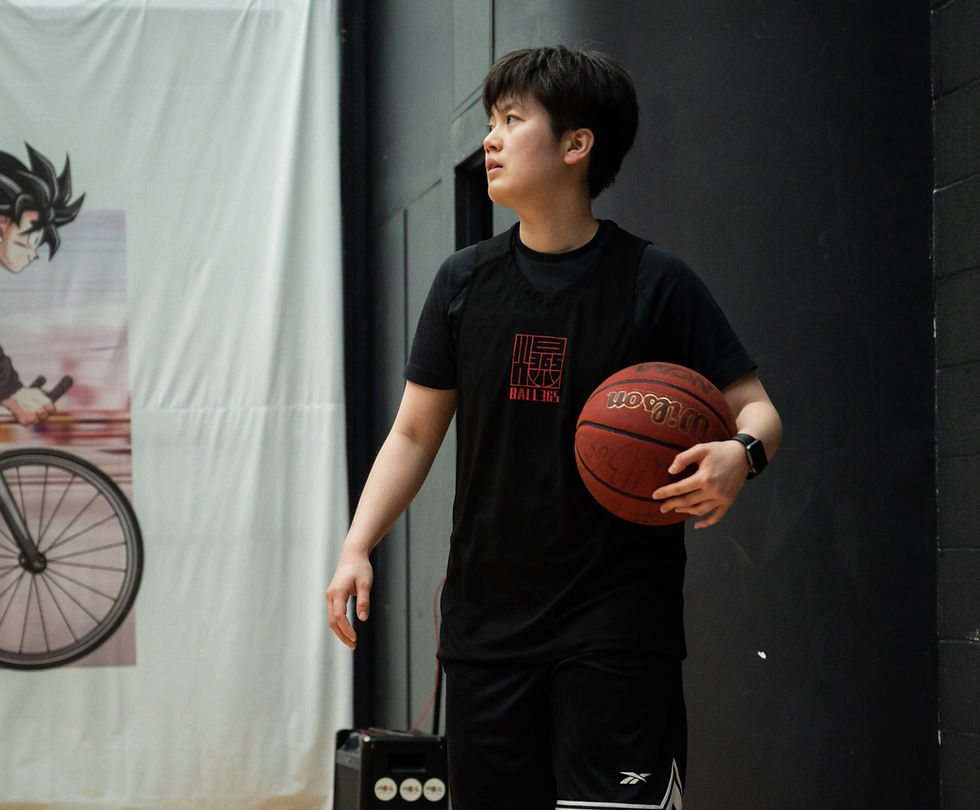
Alex Lv is a Senior Software Developer at Maple Advanced Robotics (MARI) in Richmond Hill, Ontario – but her road into robotics was not her original plan. She was in a completely different software field, but through an unexpected meeting she became smitten with developing robots….and the rest is history. This pivot forced her to learn quickly about a new world of sensors, hardware, real-world constraints and much more. This achievement in rebuilding herself professionally in a completely new field is a great source of pride for Lv – with the best yet to come.
1/ How did you get into robotics and why do you want to stay in this field?
My path into robotics started in a very unexpected way. I was introduced to Dr. Li, one of the co-founders of MARI, through friend of mine. At the time, I was not actively looking for a career in robotics, and I did not have a traditional robotics background. But during my first conversation with Dr. Li, the way he described the future of robotics, automation and MARI’s vision immediately caught my attention.
I left that meeting feeling excited and curious. Robotics was completely new to me, but it felt like a field where software could have a direct impact on the physical world. After that conversation, I prepared seriously for the next interview and eventually joined MARI.
I first started by helping with marketing and product-related materials, which helped me understand how to communicate complex technology in a clear and practical way. Over time, I became more involved in the software side of the product and eventually grew into my current role as a senior software engineer working on AARS.
The reason I have stayed in robotics is that it never feels static. There is always something new to learn, whether it is robot path planning, 3D scanning, simulation, user workflow or how to make advanced automation easier for real users. I also like that the software does not just live on a screen. It moves real machines and solves real industrial problems.
Robotics keeps me uncomfortable in a good way. There is always a harder problem waiting, and that constant challenge is what makes the field exciting for me.
2/ Tell us a little about your greatest achievements so far, inside robotics and outside robotics.
Within robotics, my proudest achievement so far has been building on and extending MARI’s existing software architecture to make the Scan&Go product line more adaptive, automated and powerful.
As a Senior Software Engineer at MARI, I work on AARS, the Autonomous Adaptable Robot System. One of my main focuses has been developing new capabilities on top of our existing platform and integrating advanced robotics technologies into the no-code workflow, including robot vision, 3D scanning, robot path generation, process automation, performance optimization, and user-facing workflow design.
What makes this meaningful to me is that it has helped change the way users interact with robotics software. Instead of requiring users to manually program complex robot processes, the software can guide and automate more of the work. To me, that is the future of robotics: advanced technology that feels practical, accessible and useful in real industrial environments.
Outside robotics, I am proud of the professional transition I have made. Before joining MARI, my background was mainly in full-stack web application development, with no formal experience in robotics, control systems, industrial automation or hardware. Stepping into robotics forced me to learn quickly and become comfortable working across software, machines, sensors and real-world constraints.
That ability to rebuild myself professionally and grow in a completely new technical field is something I am very proud of.
3/ What are your top two or three goals for the next 6-12 months?
Over the next 6–12 months, one of our company’s main goals is to promote and expand the adoption of our Scan & Go system.
Scan & Go is designed to be a flexible software architecture for system integrators. Instead of building a custom solution from scratch for every automation project, integrators can use the same software platform to connect different hardware devices, such as cameras, robots, PLCs and other industrial equipment.
What makes the system powerful is its flexibility. Users can build different automation workflows through a drag-and-drop, no-code interface, allowing them to adapt the same platform to many different applications. This is especially valuable for high-mix, low-volume manufacturing, where every project may have different parts, processes and hardware requirements.
Our goal is to help more companies and system integrators adopt Scan & Go as a practical automation platform for applications such as heavy metal grinding, sanding, welding, spraying and other industrial processes.
For us, the next step is not only to show that the technology works, but to make it easier for more partners to use, deploy and scale. We want Scan & Go to become a flexible foundation that helps integrators build automation solutions faster and apply robotics to more real-world manufacturing challenges.
4/ Why did you join the Canadian Robotics Council? What do you see as its value now and going forward?
Robotics in Canada is still relatively small compared to the global market, but I genuinely believe Canada has a lot of potential in this space. We have excellent universities, strong research, talented engineers and growing companies working on very real industrial problems.
That is one of the main reasons I got involved with the Canadian Robotics Council. There is incredible talent here, but we need to do a better job of making it more visible, both within Canada and internationally.
The value of the Council is that it helps connect people who might otherwise stay in separate bubbles: startups, manufacturers, researchers, investors, government, and engineers working directly on robotics products. Those connections matter. Robotics is too difficult for any one group to solve alone.
Going forward, I think the CRC can play an important role in helping Canada move from having strong robotics talent to having a stronger robotics ecosystem. We need more collaboration, more visibility, and more opportunities for Canadian companies to commercialize great ideas. Canada has the ingredients. The challenge is making sure they actually come together.
5/ Who would you most want to have lunch with if you could, and why?
I would choose Grace Hopper. As someone working on robotics software, I am very interested in people who make complex technology more accessible. Grace Hopper was one of the pioneers of computer programming, and her work helped move computing away from something only a small group of specialists could understand.
That idea feels very connected to what I care about in robotics. Robotics is extremely powerful, but it can also be intimidating and difficult to use. In my work at MARI, one of the most meaningful challenges is making advanced automation easier for real users through no-code workflows, robot vision, scanning, path generation, and process automation.
I would love to ask Grace how she thought about simplifying complex systems without reducing their power. I think that balance is one of the biggest challenges in modern robotics: making technology smarter but also making it more human-friendly.
BONUS QUESTION: Something you’ve read lately that’s had an impact?
A book that has recently influenced me is Brave New World by Aldous Huxley. What has really stayed with me is Huxley’s warning that society may not lose knowledge because it is banned, but because people are gradually conditioned to stop seeking it. That feels very relevant today. We live in an era where information is everywhere, but the way information reaches us is increasingly shaped by platforms, algorithms and commercial incentives.
For me, the book is a wake-up call that learning cannot be passive. Technology is supposed to make life easier, but it can also make us too comfortable. It can quietly train us to consume more, question less, and let other people — or systems — decide what deserves our attention.
This is especially important today because even content creation media, and many formerly independent voices are becoming more influenced by business models and platform incentives. The issue is not only that people have shorter attention spans. It is that the environment around us is designed to guide what we see, what we care about and sometimes even what we believe.
That matters a lot in engineering too. AI tools, automation and robotics can make us more powerful, but only if we keep thinking critically. If we use technology to avoid learning or questioning, then we are not becoming smarter. We are just outsourcing our judgment with better branding.
The book also made me think about bigger questions around reproduction, family, personal choice, and whether removing difficulty from life actually makes people happier. What makes Brave New World so compelling is that there is no easy answer. It is uncomfortable in the best way, which is usually where real thinking starts.