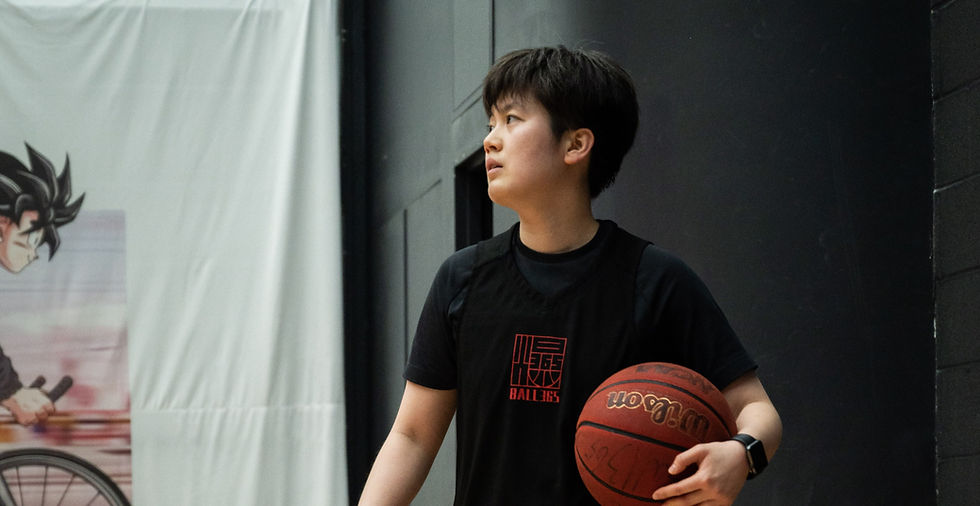
Member Spotlight: Nhung Nguyen
By: Treena Hein

Nhung Nguyen the CEO of Horizon Legacy, transforming a seven-decade-old real estate development company into a leader in construction technology and robotics. Under her leadership, Horizon Legacy built the first and largest neighbourhood in Canada using on-site robotics and is currently constructing the world's largest Indigenous housing project using robotic technology.
1/ How did you get into robotics and why do you want to stay in this field?
My path into robotics has been unconventional. I studied computer engineering and, as a student, worked on autonomous underwater vehicles. I loved the challenge of combining sensors, software, and iterative development to solve motion and decision-making problems in the physical world. After working as an engineer for a few years, I shifted my focus to renewable energy and spent the next 15 years helping build infrastructure projects across Canada.
My return to robotics was completely unexpected. My boss, whose family has been in real estate development for more than 70 years, was watching a television commercial recruiting people into the skilled trades. He came to our team and asked a simple question: "Why don't we use robots in construction?" That question set us on a completely new path. We began asking how robotics could address labour shortages, improve productivity, and help deliver housing more efficiently. Today, I lead a real estate development company that is developing and deploying robotic construction systems to build homes.
What keeps me in robotics is not the technology itself, although I find it fascinating. It is the opportunity to apply engineering to solve one of the most important challenges facing our country: housing. I believe technology gives us a chance to tackle problems that seem intractable through conventional approaches and thinking.
2/ Tell us a little about your greatest achievements so far, inside robotics and outside robotics.
Outside robotics, I am proud to look back and say that I helped build enough renewable energy to power approximately 9,000 homes in Canada. It was pioneering work and often difficult, requiring people to believe in a future that had not yet been proven.
Within robotics, building a company that is challenging conventional assumptions of what is possible in construction has been incredibly exhilarating and rewarding. Construction is one of the world's oldest industries - the last frontier - and leading this transformation is not an easy path. I feel incredibly fortunate to have the opportunity to work alongside such talented people, helping bring robotics into the built environment and applying it to one of Canada's most pressing challenges: housing. That combination of purpose and people makes the work especially meaningful.
3/ What are your top two or three goals for the next 6-12 months, for yourself professionally or for your company?
Our company's first goal is to move construction robotics from demonstration projects toward repeatable commercial deployment. The industry needs solutions that can be scaled reliably, not just impressive prototypes.
Second, I'd love to build an ecosystem within the CRC to support construction technology companies enter this space. Third (if there's any time left), I want to continue championing Canada's position as a leader in construction automation. Canada has world-class researchers, innovative companies, and pressing market needs. We can and should be a global leader in this space if we can successfully connect construction innovation with commercialization and create the conditions for others to do so.
4/ Why did you join the Canadian Robotics Council? What do you see as its value now and going forward?
One of the most valuable aspects of the Canadian Robotics Council is its ability to bring together people from different sectors who are all working toward a common goal: advancing robotics in Canada. Construction robotics is still a relatively young field, and there is a great deal we can learn from industries such as manufacturing, logistics, mining, agriculture, and healthcare that have been deploying automation for much longer. The Council creates a forum where ideas, lessons learned, and opportunities for collaboration can be shared across sectors. I am also here because of Hallie. She is a wonderful connector and builder, and she has a vision for where she wants to take the CRC that I want to be part of.
Looking ahead, I believe the Council can play an important role in helping Canada build a stronger robotics ecosystem by connecting researchers, entrepreneurs, investors, industry leaders and policymakers. Those connections will be critical to turning Canadian innovation into global success stories.
5/ Who would you most want to have lunch with if you could, and why?
I would hold an English tea party with Leonardo da Vinci, Margaret Thatcher, Nelson Mandela, Walt Disney, Kelly Johnson (Skunk Works), and Jean Luc Picard. These are all people I admire, and who fundamentally changed systems, institutions and industries. They understood how to turn ideas into reality, and I suspect the conversation would be both inspiring and entertaining. Besides, who can resist scones and sweets?
BONUS QUESTION: A person who has influenced you, and why.
My uncle, who set the course for my life's trajectory. When I was a high school student, he told me, if you like building things, go into engineering. I took his advice, and it was one of the best decisions I ever made.